
Home / Download and APK / Android Sideloading Warning: Google’s 2026 Developer
Android sideloading Key Takeaways
Google’s upcoming developer verification requirement for sideloaded APKs, set to take effect in 2026, marks the end of fully anonymous app installation on Android.
- Android sideloading will no longer allow untracked APK installations — developers must verify their identity with Google.
- The new policy applies to all third-party app stores and direct APK downloads, with a phased rollout starting in late 2025.
- Users will see clearer warnings and potential restrictions on unverified APKs, impacting power users and privacy advocates.
Table of Contents
- What Google’s 2026 Developer Verification Means for Android Sideloading
- How the New Android Sideloading Verification Process Works
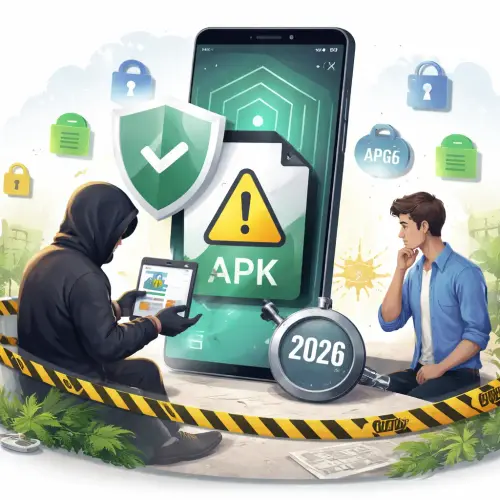
What Google’s 2026 Developer Verification Means for Android Sideloading
For years, one of Android’s biggest selling points has been the freedom to install apps from anywhere. That freedom is now on a collision course with Google’s latest security initiative.
Starting in 2026, Google will require developers to complete identity verification before their apps can be installed via sideloading — the process of manually installing APK files outside the Google Play Store. Announced quietly in a developer blog post earlier this year, the move is part of a broader push to curb malicious software that exploits sideloading channels. While the official rollout is set for January 2026, test phases are expected to begin as early as the second half of 2025. For a related guide, see 5 Things to Know Before Downloading Mega8888 APK (Malaysia Safety Guide 2026).
“This is a fundamental shift in how Android treats apps from outside the Play Store,” says Diana Hawkins, a mobile security researcher at the University of Cambridge. “Google isn’t banning sideloading, but they’re making it much harder for bad actors to operate anonymously.”
How the New Android Sideloading Verification Process Works
Under the updated policy, any APK that is installed via sideloading — whether from a third-party store, a direct download, or a file transfer — will be checked against Google’s developer registry. If the developer has not completed verification, the installation will either be blocked outright or show a conspicuously strong warning that cannot be dismissed. For a related guide, see Mega8888 Installation Blocked Fix Malaysia: Complete Android Error Solution Guide.
Key Changes in the Timeline
The rollout happens in three stages:
- Late 2025: Beta testing on Android 16 preview builds. Developers can opt in to test verification flows.
- Early 2026: Mandatory verification for apps submitted to Play Store that also distribute APKs elsewhere.
- Mid 2026: Full enforcement for all sideloaded APKs on devices running Android 16 and later.
What Developers Must Do
Developers who want their apps sideloaded without friction must create or link a Google Play Console account, complete identity verification (similar to the existing DUNS or government ID process), and ensure their signing certificates match the registered information. For open-source projects and independent developers — many of whom rely on GitHub or their own websites to distribute APKs — this adds a significant administrative step.
Impact on Different User Groups
The effect of Google developer verification 2026 will not be uniform. Different communities face different consequences.
Security-Conscious Users
For average users who rarely sideload, this change is a net positive. Malware analysts at Malwarebytes report that over 40% of Android malware samples in 2024 came from unverified sideloaded apps, often disguised as popular games or system tools. “By forcing developers to show their real identity, Google removes the cloak of anonymity that malware authors hide behind,” explains Maria Torres, a threat intelligence lead at Lookout.
Privacy Advocates
Privacy-focused users, however, worry that the new system creates a single point of failure. If Google’s verification database is compromised — or if Google uses the data to track app usage across third-party stores — that would undermine the very privacy that drew many users to Android in the first place. “Not everyone wants to tell Google which apps they install,” notes privacy researcher Arjun Mehta. “This is a tradeoff between security and surveillance.”
Power Users and Custom ROM Communities
For enthusiasts running custom ROMs like LineageOS or GrapheneOS, the impact depends on whether Google’s verification checks run at the operating system level or are tied to Play Services. If the check lives in the kernel or the installer package, custom ROMs may need to decide whether to adopt the change or risk breaking compatibility with popular sideloaded apps.
Arguments for and Against Mandatory Verification
Why Proponents Support the Change
- Reduced malware: Anonymous distributors account for the vast majority of trojanized APKs.
- Better incident response: Law enforcement and security teams can trace malicious apps to real individuals or organizations.
- User clarity: Warnings become more meaningful when they indicate a known or unknown developer.
Why Critics Oppose It
- Centralized control: Google gains the ability to block or flag any app not from the Play Store.
- Barrier to entry: Small and independent developers may skip Android altogether rather than deal with Play Console bureaucracy.
- False sense of security: Verified developers can still distribute malicious apps; verification is not a safety certification.
Practical Advice for APK Users Facing the 2026 Change
If you regularly install apps from third-party sources, you don’t need to panic — but you should prepare. Here are steps you can take now:
- Stick to reputable third-party stores like F-Droid or Aurora Store, which vet their own catalogs and are likely to adapt to the new requirements quickly.
- Verify the developer’s identity manually before you download a standalone APK. Check if the developer has a public profile on Google Play or a tracked open-source repository.
- Keep your device updated to the latest Android version. Google’s Android sideloading safety features, such as Google Play Protect, are most effective on current releases.
- Consider a secondary device for experimentation if you frequently test unverified apps. Many security researchers already use spare phones for this purpose.
- Watch for alternative verification models from groups like the Open Mobile Foundation, which may offer decentralized identity solutions for sideloading.
Useful Resources
For deeper understanding of encryption standards and secure online gaming practices, these resources provide authoritative information.
- National Institute of Standards and Technology – AES Standard – Official documentation on the AES encryption algorithm, which forms the core of Encryption Tech in Legit Mega888 APKs.
- Cloudflare – What is TLS? (Transport Layer Security) – A clear explanation of how TLS 1.3 works and why it is crucial for securing online communications, including game sessions.
Frequently Asked Questions About Android sideloading
What exactly is Android sideloading?
Android sideloading is the process of installing apps from sources other than the official Google Play Store, typically using an APK file.
Will sideloading be completely blocked in 2026?
No, sideloading will still be possible, but apps from unverified developers will show strong warnings and may be blocked depending on your device’s settings.
Does this affect apps I already have installed?
No, only future sideloading attempts are affected. Apps installed before the change will continue to work normally.
How does Google verify developers?
Google requires developers to provide identity documents or a DUNS number through the Play Console, similar to the process for publishing on the Play Store.
Will this stop all malware from sideloading?
No, verification reduces anonymous malware but does not guarantee that a verified developer is trustworthy. Malware can still come from verified accounts.
Is this change only for Android 16?
The mandatory verification will be enforced starting with Android 16, but Google may push the change to older versions through Play Services updates.
Do custom ROMs have to follow this rule?
If a custom ROM includes Google’s installer components or Play Services, it will likely enforce the verification. ROMs without Google services may bypass it.
Can I disable the verification warning?
On stock Android, the strongest warnings will be impossible to dismiss permanently. You may still install by toggling a per-app permission, but with more friction.
What happens if I try to install an unverified APK?
You will see a warning stating the app is from an unverified source. On some devices, the installation will be blocked unless you enable developer options.
Do I need a Google account to sideload after 2026?
You will not need an account yourself, but the developer of the app you are installing will need one to be considered verified.
Will F-Droid be affected?
F-Droid developers will need to decide whether to register with Google. Many may choose not to, which means their apps would appear as unverified.
What about APK files from my own backup?
If the APK was originally signed by a verified developer or extracted from a verified installation, it may pass checks. Self-signed APKs will likely flag.
Is this related to Google Play Protect?
Yes, Play Protect will be updated to include developer verification status as a factor in its scanning decisions.
Can developers verify without paying?
Currently, a Play Console account requires a one-time $25 registration fee, which may be a barrier for some open-source developers.
Does this affect sideloading on tablets or Android TV?
Yes, the policy applies to all Android-based devices, including tablets, TVs, and wearables that support APK installation.
What should third-party app stores do?
They can either collect developer verification data themselves, or rely on Google’s registry. Many are exploring decentralized alternatives.
Is there a way to test the verification system now?
Android 16 beta users can test early builds, and developers can enable verification settings on their test devices starting late 2025.
Will this affect enterprise app sideloading?
Enterprise MDM solutions can bypass many restrictions, but admins should plan for updated policies if they distribute internal APKs.
Can Google change its mind before 2026?
Yes, like all policy changes, Google may adjust the timeline or requirements based on developer and user feedback. The 2026 date is not set in stone.
What is the best way to stay updated?
Follow the official Android Developer Blog, and monitor forums like XDA Developers for real-world testing reports from early adopters.