
account suspended for suspicious activity Key Takeaways
Seeing a suspension notice for suspicious activity can be alarming, but recovery is often straightforward if you follow the right process.
- Your account suspended for suspicious activity notice typically means automated systems detected unusual login patterns or security risks.
- Most platforms allow you to recover suspended account access by verifying your identity through email, phone, or security questions.
- Proactive steps like enabling two-factor authentication and reviewing recent activity significantly reduce the chance of future suspicious activity suspension .
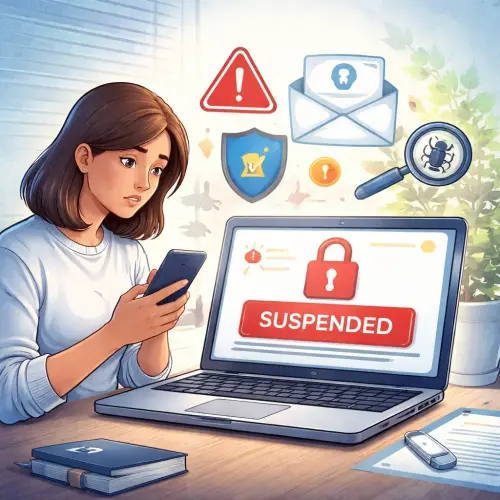
Why Your Account Suspended for Suspicious Activity Happens
When a platform detects login attempts from unusual locations, multiple failed password entries, or sudden changes to account details, it temporarily restricts access to protect your data. This suspicious activity suspension is a security feature, not a penalty. Common triggers include connecting from a new device, traveling to a different country, or using public Wi-Fi. Understanding the cause helps you respond calmly and efficiently. For a related guide, see Account Locked? 5 Fast Steps to Unlock After Too Many Failed.
Common Triggers for Suspension
Automated systems look for deviations from your normal behavior. A login from an unfamiliar IP address, rapid multiple login attempts, or unusual bulk actions like sending many messages at once can all cause a flag. Even legitimate actions, such as using a VPN or password manager, may appear suspicious to the algorithm.
Immediate Steps to Recover Suspended Account Access
Your first instinct might be panic, but staying organized is key. Follow the platform’s instructions exactly. Most services send an email or SMS with a link to verify your identity. Check your spam folder if you don’t see the message. Complete the verification within the time window — often 24–48 hours — to avoid permanent restrictions.
What to Do If the Email Doesn’t Arrive
If the verification email doesn’t show up, use the “Need more help?” or “Contact support” link on the suspension page. Provide details like your username, the email on file, and any error codes. Avoid creating a new account while your original is suspended — this violates most platforms’ terms and can lead to permanent bans. For a related guide, see 2 Users on One Mega8888 Account? 3 Big Risks to Avoid.
Step-by-Step Account Recovery Process
Once you start the recovery flow, you’ll be guided through identity verification. This typically involves confirming your email address, entering a code sent to your phone, or answering security questions. Some platforms ask you to review recent login history and confirm which actions were yours.
Documents You May Need
For accounts tied to financial services or subscriptions, you may be asked to upload a photo ID or proof of address. Keep a scanned copy ready. A government-issued ID or recent utility bill usually works. Ensure the name matches the account details exactly.
After Verification: Restoring Access
Once you pass verification, change your password immediately. Choose a strong, unique password that you haven’t used elsewhere. Enable two-factor authentication (2FA) right away. Review your account settings for any unauthorized changes, such as added recovery emails or linked phone numbers. Remove anything you don’t recognize.
How to Prevent Future Suspicious Activity Suspension
Security teams suspend accounts to prevent real threats. You can minimize false positives by maintaining consistent account behavior. Avoid logging in from unexpected IP ranges without first updating your trusted devices list if the platform offers one. If you frequently travel, notify the service beforehand or use a dedicated travel SIM so your IP stays familiar.
Set Up Recovery Options Early
Most platforms let you add multiple recovery methods. Link a backup email, a phone number, and set up security questions. Some services offer backup codes — print them and store them securely. Having at least two recovery options drastically reduces lockout time.
Monitor Account Activity Regularly
Periodically check your login history. Look for sessions from devices or locations you don’t recognize. Many platforms send alerts for unusual logins — enable them. Early detection helps you act before a suspension notice arrives.
| Prevention Tip | Effort Level | Effectiveness |
|---|---|---|
| Enable two-factor authentication | Low | Very high |
| Add backup email and phone | Low | High |
| Review login history monthly | Medium | High |
| Use a password manager | Medium | High |
| Avoid public Wi-Fi for sensitive accounts | Low | Medium |
What to Do If Recovery Fails
In rare cases, identity verification fails because the information on file is outdated or the account was compromised before the suspension. If standard recovery doesn’t work, escalate to the platform’s support team. Be polite and persistent — provide all evidence of ownership, such as old password hints, previous login locations, or purchase receipts. Some services have a dedicated appeals process for suspended account issues. Follow up after 48 hours if you don’t hear back. For a related guide, see Account Locked? 3 Easy Steps to Unlock After Too Many Failed.
Staying Safe During the Process
While waiting for support, avoid clicking on links in unsolicited emails about your suspension. Scammers often target users who are locked out. Only use official support channels found on the platform’s website. Never share your password or verification codes with anyone claiming to be support — legitimate staff won’t ask for them.
Final Checklist to Recover Suspended Account and Stay Protected
Keep this checklist handy in case you ever face a suspicious activity suspension again. Quick action with the right steps makes recovery smooth and protects your digital identity.
- Check your email (including spam) for the verification message.
- Complete identity verification within the given timeframe.
- Change your password immediately after re-access.
- Enable two-factor authentication.
- Review and update recovery options.
- Monitor login history for unauthorized access.
- If stuck, contact official support with ownership proof.
- Repeat steps annually to keep your account healthy.
Useful Resources
For authoritative guidance on account security, visit StaySafeOnline.org by the National Cybersecurity Alliance for practical tips on protecting your online identity. For platform-specific procedures, check Google’s official account recovery help page.
Frequently Asked Questions About account suspended for suspicious activity
How long does an account suspension for suspicious activity last?
Most suspensions last 24 to 72 hours if you complete the identity verification process. Some platforms may require manual review, which can take up to a week.
Can I appeal a suspicious activity suspension ?
Yes, most platforms have an appeals process if standard verification fails. You will need to provide proof of ownership, such as original sign-up email, previous passwords, or purchase receipts.
Will I lose my data if my account is suspended?
Data is typically safe during a suspension. The platform locks access to protect your information. Once you recover the account, all prior data remains intact unless the suspension lasted months and was followed by a permanent deletion.
Can I create a new account while my account is suspended?
Creating a new account during an active suspension usually violates the platform’s terms of service and may result in a permanent ban. Always try to recover the original account first.
Why was my account suspended for suspicious activity if I did nothing wrong?
Automated security systems sometimes flag legitimate behavior like logging in from a new location, using a VPN, or accessing the service after a long break. This is a false positive and can be resolved through verification.
What should I do if the verification email never arrives?
Check your spam and junk folders, and also look under “Promotions” in Gmail. Add the platform’s support email to your contacts. If still missing, use the “Need help?” link on the suspension page to request a manual resend.
Does using a VPN cause a suspicious activity suspension ?
Yes, a VPN can trigger a suspension because it routes your traffic through an IP address that may be associated with unusual activity. Some platforms flag all VPN traffic as suspicious. Disable the VPN temporarily to complete verification.
How do I prevent my account from being suspended again?
Enable two-factor authentication, add backup recovery options, avoid using public Wi-Fi for sensitive logins, and regularly review your login history. Consistency in behavior reduces false positives.
Can I recover a suspended account without a phone number?
Yes, if you have another recovery method set up, such as a backup email or security questions. If you never added a phone, the platform may send verification codes to your email instead.
What if I no longer have access to the email or phone on file?
Use the platform’s identity verification flow that offers alternative methods, such as answering security questions or uploading a government-issued ID. This process is often called “account recovery without verified contact.”
Will my linked apps or services stop working during suspension?
Yes, any third-party apps, subscriptions, or services that rely on login access to your account will be interrupted until the suspension is lifted.
Is a suspicious activity suspension the same as a hacking attempt?
Not exactly. A suspension is a protective measure taken by the platform. A hacking attempt is when someone tries to access your account without permission. The suspension may occur because the platform detected a hacking attempt.
How do I contact support if I can’t log in?
Look for a “Contact support” or “Help” link on the suspension page or login screen. Many platforms also have a dedicated recovery form that doesn’t require login.
Can a suspension affect my credit or financial standing?
Account suspensions for social media or email do not affect your credit. However, if a financial account (like a bank or payment app) is suspended, your transactions may be temporarily frozen until you verify your identity.
Why do platforms use suspicious activity flags instead of just asking for verification?
Immediate suspension prevents potential damage from unauthorized access. Asking for verification after the fact would allow malicious actors more time to misuse the account. The suspension is a proactive security step.
What information should I have ready for account recovery?
Have your username, the email address used to sign up, any previous passwords you remember, security question answers, and if possible, a recent login location or device name.
Can my account be suspended for suspicious activity more than once?
Yes, if the underlying behavior (like using a shared VPN or logging in from new locations frequently) continues, you may experience repeat suspensions. Updating your trusted devices list can help reduce this.
Will the suspension be removed automatically after some time?
Usually, no. Most platforms require you to complete the identity verification steps to lift the suspension. Waiting without action could lead to permanent account deletion after a long period.
Does a suspension mean my account was hacked?
Not necessarily. A suspension only indicates that suspicious behavior was detected. It could be a false positive from your own legitimate activity. Checking your login history will tell you if unauthorized access occurred.
Should I change passwords on other accounts after a suspension?
Yes, if you suspect your credentials were compromised. Change passwords on any other accounts that used the same email and password combination. Use a password manager to create unique passwords for each service.